America’s Premier Mum Show

Furney’s Nursery cordially invite’s you to attend the Evergreen Chrysanthemum Association’s Show at 21215 International Blvd(HWY 99) in Des Moines, WA. Dates are Friday October 23 from 1PM-6PM, Saturday October 24th from 9 AM to 6 PM and Sunday from 10 AM to 3 PM.

See hundreds of large exhibition English Mums and amazing plant culture.

Free to the public. Come see and view the season’s results of this fascinating hobby!

Aki Matsuri September 12th & 13th

The 12th Annual Japanese Cultural Arts Event (Aki Matsuri)

Date: September 12 and 13, 2009
Time: Saturday (10 a.m. – 6 p.m.) and Sunday (11 a.m. – 5 p.m.)
Location: Bellevue College (BC), Main Campus
Buildings: Gym, C-Bldg. & R-Bldg.
3000 Landerholm Circle SE, Bellevue, WA 98007
Contact: info@enma.org
Website: www.enma.org (has links to BC & Campus Map)
Cost: Admission & Parking are free. Fees apply to some workshops.

Japan comes to Bellevue College for a weekend! A two-day program of Japanese cultural and educational events for all ages. Join with thousands of other visitors to celebrate Japan’s traditional and rich cultural heritage.

The matsuri includes 2 full days of on-stage Japanese Performing Arts, Japanese Martial Art demos by local dojo members, Puppet Shows based on Japanese Folk Tales, Tea Ceremony demonstrations in the Teahouse, 65+ Exhibit booths, and Japanese food booths. Browse through “Nomi-no-ichi … a Japanese style flea market” to make a lucky find! Meet with “Hello Kitty”!

This year’s features are:

Tsugaru Nuri (Lacquerware) and Tsugaru – Exhibit & on-going demonstration by Tsugaru Nuri Craft person, Kozo Fujino, and lecture on Tsugaru region (3 PM at Classroom C164 on both days) by Tsugaru District Researcher, Anthony S. Rausch (PhD), from Hirosaki, Japan.
Yakumaru Nodachi Jigenryu (one of the ancient Martial Arts of Japan) – A group of twelve (12) members from Kagoshima Headquarters and Tokyo branch of Yakumaru Nodachi Jigenryu Hozonkai lead by Head Master & President Ryuichi Higashi will give Hono Enbu demonstrations from 1 p.m. on both days. Prior to the demonstrations each day, Professor Hisashi Takahashi will give special Power Point presentations in English to introduce the history of Yakumaru Nodachi Jigenryu (12 PM at Classroom D101).
18th Annual Koi Show presented by Washington Koi & Water Garden Society with more than 200+ koi on display, judging Koi, Koi sales, lectures, and more!

Where else can you shop, eat, and browse so many diverse and interesting family activities in one location? Yes, there really is something for everyone!

To learn more about Aki Matsuri 2009, please visit www.enma.org

Furney’s Nursery, Des Moines, WA

September 2009 Newsletter

MEETING OF THE ECA – THURSDAY September 10th , 2009 at 7 PM at the Seattle Police Athletic Association Office (SPAA) site at 11030 East Marginal Way South, Tukwila.

TELEPHONE COMMITTEE MEMBERS call your lists early as your calls do help to increase attendance.
ANNUAL GARDEN TOUR – The annual garden tour and picnic was Sunday August 8th.
The tour viewed a variety of gardens with many Chrysanthemums. It turned out to be a nice day. The tour visited the gardens of Bob and Mary Lou Ewing (who supplied refreshments to help us wake up). Many thanks to Don and Jane Stark for letting us see how their chrysanthemums are doing, the tour concluded with a potluck picnic at Rich and Julie Pozniak’s beautiful home. It was a great picnic; thanks to the Pozniak’s hospitality and all who brought such delicious dishes for everyone to enjoy. We had 19 members in attendance. A good time was had by all.. Thanks also to Steve Backstrom for giving me driving directions to the Pozniak’s and also thanks to Don Stark for their directions as well.

Special Thanks to the members who opened their gardens for us to tour, it was a pleasure. Special Thanks to Rich and Julie Pozniak for Hosting the Picnic. I would like to also express Our Thanks to Jack Brandon for coordinating the telephone tree helpers and notifying members of the events; this contributed to our great turn out for the garden tour and picnic. Many Thanks to all the great cooks.

For those who already have mature blooms, consider entering them in the Puyallup Fair. For information about the fair, go to www.thefair.com on the internet. Select Entries and Floral and the Chrysanthemum section to obtain the Puyallup Fair Show Schedule. Those exhibiting at the fair get free admittance to the fair for the day.

SEPTEMBER MEETING: This is a very important meeting as we begin to prepare for our annual show October 24th and 25th (Set-up Wed. Oct. 21st). Judging Friday Oct. 23rd at Furney’s Nursery, 21215 International, Blvd. and Pacific Hwy. S.

Just a reminder that the Aki Matsuri (Fall Festival) will be held September 12th and 13th at Bellevue Community College. Our club is having an exhibit there. Maybe some of our ECA members will have some blooms to show off there.

LOOKING FORWARD TO SEEING EVERYONE AT THE MEETING, IF RIDES ARE NEEDED PLEASE CALL SOMEONE LIVING IN YOUR AREA.

PLANT CULTURE and SUPPLIES: – The September meeting will devote time to the care and feeding of the blooms as they develop; Club supplies will be available, place orders for specific items with Don Stark. Cultural recommendations are attached. With possible rain or showers consider your sheltering options for September as we move to the latter part of the growing season.

SEPTEMBER TO DO LIST – (adapted from Don Stark 9/98 notes)

Once the buds have broken the membrane and some petal tips are showing, it is time to get the pots into or under some kind of shelter. The basic idea is to protect the blooms from rain and dew. If rain or dew is present when the sun strikes, you will almost certainly burn the florets. Shelters come in a variety of sizes, names, and shapes including porches, large overhanging eaves, garages, greenhouses, and temporary wood and plastic structures.

Sheltering Plants During the Bloom Cycle Starting September 1
• Shelter requirements are daytime light (though it can be shady), ventilation, and temperature control.
• Maximum temperature should be kept below 80 degrees F if possible. Above that temperature the probability of bloom damage due to petal rot is high. If the shelter is exposed to too much sun in the early Sept days, the temperature within the shelter can skyrocket.
• Big fans keep the air moving and the temperature down. Fans also hopefully can bring air from a shady side of the shelter to cool the overall area as well.
• Lining the inside of the shelter with old sheets or muslin will also reduce the heat and filter the sunlight.

Bring Pots Into Cover
• Wash the pots to get rid of the crud and residue from the growing area.
• Pick off old dead and damaged leaves (mostly at the bottom of the plant) that harbor pests and fungus.
• Spray the plant with a fungicide and insecticide before taking to the shelter.
• Watch for and destroy earwigs. They wreck blooms when they get inside.
• Top-dress the pots again. Put about ½ to ¾” of the 9-Inch mix or Soilless mix on the surface of the pot and level it. Top-dressing the plants helps finish plant growth now and also promotes shoots on the plant stools for our next growing season.
• Optionally, add ¼ teaspoon FeSo4 to enhance color. Do not add to plants with white or yellow blooms.
• Add ¼ teaspoon of Potash to help harden off the plant and keep the blooms from being too soft.

Plant Clean Up and Cut Back to Final Lateral Count
• As the plant goes to shelter, if not already done, cut back to the final lateral count selecting the best overall laterals. For #1’s keep 1 or 2 blooms per plant, #2’s keep 2 blooms per plant, #3’s and others excluding specimen plants keep 2 to 5 blooms per plant.
• Stake and tie up the selected laterals and add support shingles for the blooms as you house the plant.
• Remove or pick off the side laterals on the selected stems.

Fertilizing & Watering
• For late season fertilizing, reduce fertilizer to ½ strength for 2-3 weeks. After the petals start to fall, gradually increase feed. Switch to a higher potash fertilizer along the lines of a 15-10-30 or other bloom feeder fertilizer and go lightly.
• Watering is different at this stage as the plants are kept a little dryer at this stage. Water plants more sparingly, using about 1 pint per watering. Do not water when the temperature exceeds 75F.
• There are two schools of thought as to the best time of day to water. Previous year cultural notes recommend to water in the evening as the day is cooling down to help avoid sending the plant sap to the blooms in heat of day and blowing out or cracking the bloom neck. Bob Walker recommends watering in the early part of the day.
• Water/fertilize from a bucket using a 1-pint jar or similar small container. Do not use the hose and spread water everywhere on the shelter floor. Keep the finishing area dry and clean.

August 2009 Newsletter

ANNUAL GARDEN TOUR AND POT LUCK PICNIC

AUGUST 8TH, 2009

2009 GARDEN TOUR The annual ECA garden tour and Picnic is scheduled for Saturday, August 8th.   The 2009 garden tour will  be in the South end and will finish with a picnic at  Rich Pozniak’s home in North Bend, WA . Picnic is Pot Luck and at the July meeting, there was a sign up sheet provided.  Club members can still sign up and attend..

TELEPHONE COMMITTEE MEMBERS call your lists early as your calls do help to increase attendance. Please ask if they are attending the garden tour and pot luck picnic and confirm what they will bring and give a count of members attending and dishes they will bring to Steve Backstrom.

For those going on the garden tour, we will meet at Valley Ridge Park on 188th and 46th Ave. South, next to Tyee High School.   The tour Caravan will be leaving at 9:30am sharp.  Scheduled stops for the tour include the homes of Bob and Marylou Ewing, Don and Jane Stark and then on to Rich and Julie Posniak’s home for a tour and picnic.  Tour order and maps for the tour destinations will be provided at the meeting place, Valley Ridge Park on 188th and 46th Ave. South. The tour will proceed as a caravan from there.   Carpooling is encouraged.  Following is a list of the addresses for the scheduled stops.

Valley Ridge Park on 188th and 46th Ave. South leaving at 9:30 sharp

First Stop, Bob and Marylou Ewing’s to see their beautiful garden.  Next we continue to Don and Jane Stark’s garden and see what Don is growing this year. We will then proceed to Rich and Julie Posniak’s garden  where we can not only enjoy his Mums, but also have our annual Pot Luck Picnic.  Members who cannot make the tour may proceed directly to Rich and Julie Posniak’s  in North Bend. Plan to arrive there between 11:00 am and 12:00 pm.

Members should receive a call from the Club’s telephone tree committee this week to determine an estimated head count of those planning to attend and their potluck contribution (hot dish, salad, or desert) to assist the picnic planners.

LOOKING FORWARD TO SEEING EVERYONE AT THE PICNIC

PLANT CULTURE and SUPPLIES: Place orders for specific items with Don Stark.  Cultural recommendations are attached for August and September.  It is time to consider your sheltering options for September as we move to the latter part of the growing season.

Member News

Here is some news about the Walkers next door that is of interest to our ECA group.  Laureen had a stroke last Thursday.  Per Bob, the only thing affected was her walking as she has to walk with a walker.  She is currently at the Avalon Care Center in Federal Way.  Bob recently had day surgery last Thursday.  (Sent to me by Mark Ross, former ECA President)

Happy Anniversary 53rd for Bob and Mary Lou Ewing.  August 4th CONGRATULATONS

REMINDER:

Ron Elliott, President, would like to remind all members to work on their List/Inventory of the

Plants you are growing and any stools that you will retain and propagate.  If you haven’t already submitted your list of Cultivars please complete it and have it ready for the August meeting at the Pot Luck.

Please include your name, phone number and e-mail address.

EVENTS:

Aki Matsuri:

The 2009 Aki Matsuri will be held Saturday, Sept 12th & Sunday the 13th .

I-5 on the Bellevue Community College’s main campus, Admission & Parking are FREE.  E-mail www.enma.org.  Tom & Katsuko Brooke.

Puyallup Fair:

One show Monday,  September 21st, 2009.  Additional  information is available only at the website www.thefair.com .  Go to entries and then floral.  An entry schedule may be printed from there if you have computer access.

As a reminder, please send any email address or postal address changes to Jill Aldrich.  To receive future monthly notices by email only rather than US mail, please send an email to: aldrich2@msn.com

AUGUST TO DO LIST – Revised July 2005 by Don Stark and Bob Walker

August is a major growing month.  Continue with the watering, feeding, and pest control programs noted in the July newsletter. l The appearance of bud color, especially for the early cultivars, signals a shift to the late season feeding program.  Flush the pots at least once during the month to reduce the accumulation of fertilizer salts in the pot.  Disbudding is the primary cultural activity for the first half of August.  Stake and reduce the number of laterals as the buds appear and are secured.  Experience suggests there is no way to get too much support for laterals and blooms.  Top-dress the plants with fresh potting mix to assure maximum plant growth now and new shoots for next season.

1. Staking and Lateral Control

  • Surplus laterals are removed as the buds are firmly established for all varieties with the exception of incurves (classes 3, 13, and 23) and some intermediate types (classes 5, 15, and 25), which are culled in early September.  With 2 ½ months until the ECA show, it may be conservative to wait a few more weeks for the final reduction in the event of bug damage, wind, or accidents.
  • Reduce the number of laterals to the final count as listed below.  For early varieties follow last number, ex. #14 and #24 use #4.
  • For #1 and #2 cultivars, carry 1 or 2 laterals.
  • For #3 cultivars, carry up to 5 laterals, cull to 3 in Sept.
  • For #4 cultivars, carry 2 or 3 laterals.
  • For #5 cultivars, carry 2 to 5 laterals.
  • All laterals should be individually staked Fasten the laterals with “twist’ems”.  If the laterals are not staked or otherwise supported, they break off with rain or breeze and also grow crooked, making the resulting bloom difficult or impossible to enter in shows.

2. Blooms and Bloom Support

  • Watch for buds and secure them as they appear.  Most buds appear by August 15.  Look for “rabbit-ear” leaves below the bud and laterals forming at leaf axils.  As the bud reaches about ¼ inch, or the size of a small pea, it should be secured by removing the ring of side buds and the other side shoots that may appear in the leaf axils below.  Keep those new laterals removed.  This grooming of the selected laterals will require regular and sometimes daily attention.
  • Prepare strips of wood 16-18 inches long and 3/8” wide made from shingles, shakes, or ¼” plywood.  Stain them green preferably.  These are used to support each bloom and are secured with two “twist’ems”.  Place them on the bud/lateral as the bud over-grows the stakes to protect the lateral and bud, to keep the lateral growing straight, to support the bloom, and keep the bud horizontal.  A “cocked” bloom will never win a blue ribbon.

3. Feeding & Top-Dressing

  • Top-dress the pots in early August and again when the buds show color, about September 1-15.  Put about 1 handful of compost or Soil less mix on the surface of the pot and level it each time you top-dress.
  • Water thoroughly when you water and then almost dry out the plant before watering again. If plants are yellow, first try drying them out.  If drying out fails, feed ½ teaspoon Epsom salts per plant or carefully use of one of the liquid iron solutions.
  • Continue fertilizing until buds appear with the mid season fertilizer program as described in the July to-do list.
  • Flush the pots once per month to prevent fertilizer salts build-up.
  • The appearance of the bud especially for the early cultivars, also signals a shift to the late season feeding program.  When the buds appear, stop or reduce feeding ½ strength for 1-2 weeks and water the plants more sparingly. At this stage it’s time to change the feeding program to a late season fertilizer.  Either switch to a high potash fertilizer (15-11-29) or continue with the 20-10-20/20-9-20+ fertilizer and add approximately15 % by volume of Murate of Potash.  In either case continue to fertilize at ½ to 2/3tsp per gal of water.

4.      Pest Management and Housing

  • Review your pest management program every two weeks and correct as necessary.  Have your plants free of aphids and fungus before the blooms are set to open.  Aphids in blooms are cause for disqualification at shows.
  • Spray every two weeks with a fungicide or an insecticide/fungicide if not using Marathon as an insecticide.
  • Watch for and destroy earwigs.  They wreck blooms when they get inside.
  • Finally, anticipate your housing needs and start preparations to get your show flowers under cover by the first or second week of September.

Don Stark, 4 July 2005

SEPTEMBER TO DO LIST – (adapted from Don Stark 9/98 notes)

Once the buds have broken the membrane and some petal tips are showing, it is time to get the pots into or under some kind of shelter.  The basic idea is to protect the blooms from rain and dew.  If rain or dew is present when the sun strikes, you will almost certainly burn the florets.  Shelters come in a variety of sizes, names, and shapes including porches, large overhanging eaves, garages, greenhouses, and temporary wood and plastic structures.

Sheltering Plants During the Bloom Cycle Starting September 1

  • Shelter requirements are daytime light (though it can be shady), ventilation, and temperature control.
  • Maximum temperature should be kept below 80 degrees F if possible.  Above that temperature the probability of bloom damage due to petal rot is high.  If the shelter is exposed to too much sun in the early Sept days, the temperature within the shelter can skyrocket.
  • Big fans keep the air moving and the temperature down. Fans also hopefully can bring air from a shady side of the shelter to cool the overall area as well.
  • Lining the inside of the shelter with old sheets or muslin will also reduce the heat and filter the sunlight.

Bring Pots Into Cover

  • Wash the pots to get rid of the crud and residue from the growing area.
  • Pick off old dead and damaged leaves (mostly at the bottom of the plant) that harbor pests and fungus.
  • Spray the plant with a fungicide and insecticide before taking to the shelter.
  • Watch for and destroy earwigs.  They wreck blooms when they get inside.
  • Top-dress the pots again.  Put about ½ to ¾” of the 9-Inch mix or Soilless mix on the surface of the pot and level it.  Top-dressing the plants helps finish plant growth now and also promotes shoots on the plant stools for our next growing season.
    • Optionally, add ¼ teaspoon FeSo4 to enhance color.  Do not add to plants with white or yellow blooms.
    • Add ¼ teaspoon of Potash to help harden off the plant and keep the blooms from being too soft.

Plant Clean Up and Cut Back to Final Lateral Count

  • As the plant goes to shelter, if not already done, cut back to the final lateral count selecting the best overall laterals.  For #1’s keep 1 or 2 blooms per plant, #2’s keep 2 blooms per plant, #3’s and others excluding specimen plants keep 2 to 5 blooms per plant.
  • Stake and tie up the selected laterals and add support shingles for the blooms as you house the plant.
  • Remove or pick off the side laterals on the selected stems.

Fertilizing & Watering

  • For late season fertilizing, reduce fertilizer to ½ strength for 2-3 weeks.  After the petals start to fall, gradually increase feed.  Switch to a higher potash fertilizer along the lines of a 15-10-30 or other bloom feeder fertilizer and go lightly.
  • Watering is different at this stage as the plants are kept a little dryer at this stage.  Water plants more sparingly, using about 1 pint per watering.  Do not water when the temperature exceeds 75F.
  • There are two schools of thought as to the best time of day to water.  Previous year cultural notes recommend to water in the evening as the day is cooling down to help avoid sending the plant sap to the blooms in heat of day and blowing out or cracking the bloom neck.  Bob Walker recommends watering in the early part of the day.
  • Water/fertilize from a bucket using a 1-pint jar or similar small container.  Do not use the hose and spread water everywhere on the shelter floor.  Keep the finishing area dry and clean.

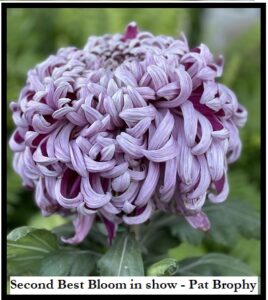
Blue Ribbon!

Vienna Waltz.jpg
Vienna Waltz
Come to our meetings to learn how you can grow mums like this. We meet the second Thursday of each month except August at 7 PM in the Bingo parlor on the right as you drive into the SPAA complex. Seattle Police Athletic Association Office (SPAA) site at 11030 East Marginal Way South, Tukwila, WA.

Where We Meet and When

MEETING OF THE ECA –The second THURSDAY of each month except August and November at 7 PM at the Seattle Police Athletic Association Office (SPAA) site at 11030 East Marginal Way South, Tukwila. The entrance is one block north of 112th on the East side of the street. Turn in just south of the Bingo sign and head east 200 feet. The meeting is held in the big building on the right. Contact “Steve at ecamumclub dot org”

View Larger Map

July 2009 Newsletter

HAPPY 4TH OF JULY
MEETING OF THE ECA – THURSDAY JULY 9, 2009 at 7 PM at the Seattle Police Athletic Association Office (SPAA) site at 11030 East Marginal Way South, Tukwila.
TELEPHONE COMMITTEE MEMBERS call your lists early as your calls do help to increase attendance.
2009 GARDEN TOUR – The annual ECA garden tour and Picnic is scheduled for Saturday, August 8th. The 2009 garden tour will at Richard and Julie Pozniak’s. Picnic is Pot Luck and at the July meeting, there will be a sign-up sheet provided. Club members will finalize any outstanding issues, details and directions for the upcoming event.
HIGHLIGHTS: By Bob Ewing,
MESSENGER: Messenger is not a fertilizer or pesticide. But it will help protect your plants from harmful pathogens through growth and stress-defense responses. I have been using it every 2-3 weeks for several years on a variety of plants. Overall I have noticed more fruit on the tomatoes. Improved leaf and bloom quality, greater root mass. I have experienced earlier blooms and more robust plants. One packet will supply a gallon of spray. Messenger is non-toxic and can be applied to fruit even on day of harvest. The American Rose Society and the National Chrysanthemum Society have endorsed it as a product that will improve the vigor of these plants. Our club is offering it at a price of $2.00 a package, a bargain price for keeping your garden healthy.
SUPPLIES – Club supplies will be available at the July meeting. Please place supply orders early (at least two or three days prior to meeting) with Don Stark.Messenger packets will be available for $2.00. . Chrysanthemum care recommendations are attached for July and August.
MEMBER NEWS – Congratulations to Don Slaughter who just celebrated his 94th Birthday and is an active member still growing Chrysanthemums. Best Wishes from all of us.
Congratulations to Bob and Laureen Walker who are celebrating their 59th Wedding Anniversary on July 15th, Congratulations to you both.
Aki Matsuri
We have some members who have agreed to man the exhibit tables at the 2009 Aki Matsuri to be held on September 12th and 13th. Go to www.enma.org to see information about it. If there are any other members that would be interested in helping out, let Jim Anshutz know.
As a reminder, please send any email address or postal address changes Jill Aldrich. To receive future monthly notices by email only rather than US mail, please send an email to Jill Aldrich.
JULY TO DO LIST – Revised July 2005 by Don Stark and Bob Walker
Staking and Lateral Control
• Surplus laterals should have been removed by now. At this stage of the growing cycle carry one more lateral than planned to carry at the bloom stage for large and medium exhibition (#1 and #2). For incurves, 4’s, and 5’s, carry up to five laterals. This provides extras in the event of bug damage or accidents. Within 3 – 4 weeks after the buds are formed, cut down to the final lateral count.
• Surplus laterals are culled using the following guide noting that the incurves (#3) do not get the final cull until September.
• For #1 and #2 cultivars, carry 2 or 3 laterals, cull to 1 or 2.
• For #3 cultivars, carry up to 5 laterals, cull to 3 in Sept.
• For #4 and #5 cultivars, carry up to 5 laterals, cull to 3-4.
• For earlies (#13-15 and #23-25), observe last number (Example for #13 and #23, use the #3 guide and for #14, #15, #24, or #25 use #4 and #5 guide).
• For the spiders, quills, and spoons (per mr), follow the guide for the #4 and #5.
• Continue disbudding the remaining laterals to channel growth to the main lateral.
All present laterals saved should now be individually staked. Use stakes ripped from nominal one-inch lumber, which are ½ inch wide
(5/8” x ½”). These stakes look better and do not rot if you paint or stain them green. Stake length ranges from 3-6 feet, with the majority
4 feet. Another much more costly alternative is to purchase the green fiberglass stakes also available in 3-6 foot length at local stores.
Finally, heavy (Big) 4 FT. and 5 Ft. bamboo stakes can be used effectively.
• Fasten the laterals to the stakes with “twist’ems”, 2-4 per lateral. If the laterals are not staked or otherwise supported, they break off with rain or breeze and also grow crooked, making the resulting bloom difficult or impossible to enter in shows.
Taking the buds
• Most buds are formed from late July to the end of August
• Watch for the buds to form and as soon as the bud is the size of a pea start removing the ring of little side buds that form just below and around the main bud. This is called “Taking the Bud” which in reality is leaving the main bud and removing all the next layer of buds. A light push sidewise with the thumb will break away the small buds you are removing.
• Keep those side laterals removed as they reform on the main stem after taking the bud
• Get strips of wood 16-18 inches long and 3/8” wide made from shingles, shakes, or ¼” plywood. Stain them green. These are used to support each bloom and are secured with two “twist’ems”. Place them on the bud/lateral as the bud over-grows the stakes to protect the lateral and bud, to keep the lateral growing straight, to support the bloom, and keep the bud horizontal. A “cocked” bloom will never win a blue ribbon.
Feeding & Top-Dressing
• Keep feeding! Keep feeding! The club sells Peters 20-10-20 and Technigrow 20-9-20+ (The plus is for added sulfur for greening) water-soluble fertilizer at our meetings. Either of these, or standard Miracle grow are excellent mid season fertilizers.
• Standard dosage for all is 1 tsp per Gal. Of water, fed once per week. If you feed with every watering, you may cut the dosage in half. It is common to increase the dosage (up to double the rate) for some blooms during July and August. Heavy feeders include Gigantics, Jessies, Connies, Seychelles and Ralph Lambert. On the other side, most reds, most purples and most incurves require a lighter feeding level such as 2/3 the standard dosage, or in the case of incurves, grow lots of laterals to absorb the heavier feeding.
• Some growers like to add a little granular rose fertilizer such as Agro 4-10-8. However keep in mind that it is easy to overfeed so be prudent. Watch and feel the leaves. They’ll tell you when you are over feeding.
• Feeding should be continued right up to the bud formation to get that added surge of nitrogen into the bud. Then cut feed in half or discontinued for 1-2 weeks after the bud has formed. Then resume feeding at a reduced rate, Some switch to a high Potash fertilizer (15-11-29). Others continue with the mid season fertilizer and add some murate of potash to harden off the plants.
• Some plants may tend to be yellowish instead of green (Jessie HabgoodsDukes, Lundies and Connies for instance). If you have yellow plants first try drying them out with less water. If unsuccessful feed ½ to 1 tsp Epsom salts per plant. Leaf feeding with liquid iron such as Greenall or Sequesterine also helps green up the foliage. Follow product directions, do not over feed the iron.
• If plants are yellow, first try drying them out. If unsuccessful, feed ½ teaspoon Epsom salts per plant. Leaf feeding of liquid iron such as Greenall or Sequesterine also helps green up leaves. Follow product directions, do not overfeed liquid iron.
• Water thoroughly when you water but don’t water until the plant needs watering. Jessies and Dukes generally require less water than most so don’t water them just because your passing by with the hose. On the other side, the Gigantics and Pat Brophy need more frequent watering. Above all, don’t over water. You can let the plants flag a little before rewatering.
Top Dressing
Top dress the pots in late July to early August, and again when the buds show color (around Sept 1-15) Spread 1-2 handful of your
final potting mix or the soil less mix each time. This gives the roots a better growing environment.
Pest Management
• Continue to review your pest management program every two weeks. Have plants free of aphids and fungus before the blooms are set to open. Aphids in blooms are unsightly and can be cause for disqualification at shows.
• Marathon Systemic Insecticide is applied once per growing season to each pot at a rate of ½ teaspoon per pot to control aphids (particularly black aphids). A second application can be used if needed. Some other bugs such as leafhoppers and ear wigs need to be picked off the plants or they will ruin the bud/bloom.
• Spray every two weeks with a fungicide or an insecticide/fungicide, mostly on the older bottom leaves. Pick off damaged and dead leaves to reduce the sources of fungus.
• For fungicide, Ortho Funginex or Funginil work well but are hard to find as they have been pulled from the wholesale market.
• A very good replacement fungicide is the Ferti.lome broad spectrum liquid fungicide. It contains Daconil. Also the Shultz Garden safe fungicide should work well as it is essentially the same as the Ferti.lome.
• Insecticides that are effective historically for black aphids include Liquid Diazinon and Nicotine Sulphate (Black Leaf 40), if available. Malathion can be sprayed for green aphids; however, it is not effective on black aphids.
AUGUST TO DO LIST – Revised July 2005 by Don Stark and Bob Walker
August is a major growing month. Continue with the watering, feeding, and pest control programs noted in the July newsletter. l The appearance of bud color, especially for the early cultivars, signals a shift to the late season feeding program. Flush the pots at least once during the month to reduce the accumulation of fertilizer salts in the pot. Disbudding is the primary cultural activity for the first half of August. Stake and reduce the number of laterals as the buds appear and are secured. Experience suggests there is no way to get too much support for laterals and blooms. Top-dress the plants with fresh potting mix to assure maximum plant growth now and new shoots for next season.
1. Staking and Lateral Control
• Surplus laterals are removed as the buds are firmly established for all varieties with the exception of incurves (classes 3, 13, and 23) and some intermediate types (classes 5, 15, and 25), which are culled in early September. With 2 ½ months until the ECA show, it may be conservative to wait a few more weeks for the final reduction in the event of bug damage, wind, or accidents.
• Reduce the number of laterals to the final count as listed below. For early varieties follow last number, ex. #14 and #24 use #4.
• For #1 and #2 cultivars, carry 1 or 2 laterals.
• For #3 cultivars, carry up to 5 laterals, cull to 3 in Sept.
• For #4 cultivars, carry 2 or 3 laterals.
• For #5 cultivars, carry 2 to 5 laterals.
• All laterals should be individually staked Fasten the laterals with “twist’ems”. If the laterals are not staked or otherwise supported, they break off with rain or breeze and also grow crooked, making the resulting bloom difficult or impossible to enter in shows.
2. Blooms and Bloom Support
• Watch for buds and secure them as they appear. Most buds appear by August 15. Look for “rabbit-ear” leaves below the bud and laterals forming at leaf axils. As the bud reaches about ¼ inch, or the size of a small pea, it should be secured by removing the ring of side buds and the other side shoots that may appear in the leaf axils below. Keep those new laterals removed. This grooming of the selected laterals will require regular and sometimes daily attention.
• Prepare strips of wood 16-18 inches long and 3/8” wide made from shingles, shakes, or ¼” plywood. Stain them green preferably. These are used to support each bloom and are secured with two “twist’ems”. Place them on the bud/lateral as the bud over-grows the stakes to protect the lateral and bud, to keep the lateral growing straight, to support the bloom, and keep the bud horizontal. A “cocked” bloom will never win a blue ribbon.
3. Feeding & Top-Dressing
• Top-dress the pots in early August and again when the buds show color, about September 1-15. Put about 1 handful of compost or Soil less mix on the surface of the pot and level it each time you top-dress.
• Water thoroughly when you water and then almost dry out the plant before watering again. If plants are yellow, first try drying them out. If drying out fails, feed ½ teaspoon Epsom salts per plant or carefully use of one of the liquid iron solutions.
• Continue fertilizing until buds appear with the mid season fertilizer program as described in the July to-do list.
• Flush the pots once per month to prevent fertilizer salts build-up.
• The appearance of the bud especially for the early cultivars, also signals a shift to the late season feeding program. When the buds appear, stop or reduce feeding ½ strength for 1-2 weeks and water the plants more sparingly. At this stage it’s time to change the feeding program to a late season fertilizer. Either switch to a high potash fertilizer (15-11-29) or continue with the 20-10-20/20-9-20+ fertilizer and add approximately15 % by volume of Murate of Potash. In either case continue to fertilize at ½ to 2/3tsp per gal of water.
4. Pest Management and Housing
• Review your pest management program every two weeks and correct as necessary. Have your plants free of aphids and fungus before the blooms are set to open. Aphids in blooms are cause for disqualification at shows.
• Spray every two weeks with a fungicide or an insecticide/fungicide if not using Marathon as an insecticide.
• Watch for and destroy earwigs. They wreck blooms when they get inside.
• Finally, anticipate your housing needs and start preparations to get your show flowers under cover by the first or second week of September.
Don Stark, 4 July 2005

June 2009 Newsletter

MEETING OF THE ECA – THURSDAY June 11, 2009 at 7 PM at the Seattle Police Athletic Association Office (SPAA) site at 11030 East Marginal Way South, Tukwila.
TELEPHONE COMMITTEE MEMBERS – Contact your lists early in June as your calls do help to increase attendance.
Looking forward to seeing all of you at the meeting
YEARBOOKS – The 2009 ECA Yearbooks have been distributed. Notify the secretary if you did not receive your yearbook.
Correction to Yearbook: The cell phone # for Heinz and Gloria Pieniak is 206-909-7273
SUNSHINE: If anyone has “Sunshine” to report, please let Jill Aldrich (206-878-8010 or aldrich2@msn.com) know and she will send a card.
GARDEN TOUR: Will be at Richard and Julie Pozniak’s on August 8th, 2009, Saturday.
Koji Norikane will be celebrating his 95th on June 1st, 2009. He has been married to his wife Mary, 67 years.
Follow-up on “Messenger”
(From News from King’s Mums) We have been using Messenger for six years now. We have found that in addition to increasing growth and general health, we have been able to reduce the amount of fertilizer needed by half. Messenger is applied with our soluble fertilizer at a rate of approx. 2 oz. To 50 gallons in 25 pounds of 20-9-20 concentrate fertilizer. This is then diluted at 100-1 through our injector system. This then becomes only a very trace amount of Messenger. All plants become more efficient in their use of nutrients with traces of Messenger.
……………………………………………………………………………………………………..
Ron Elliott, President sent a message via e-mail to me to read at our May 14th meeting, I didn’t look at my e-mail till after the meeting.
“I went to the Portland Mum club sale carrying some 400 cuttings for sale at Portland nursery. I gave away some of our new stock to the Top growers plus some of my bush mums about 50 total. The club had 2 growers bring mums in plus ours, selling the cuttings for $4.00. I did not ask how much $ they made, but did ask for a donation to our club for the plants. They said at the next board meeting they will bring it up. They was real excited to have an influx of different mums to pick from. I had to explain the British numbering system and how we tagged our mums. I came back with 200 cutting that I took to the Tacoma Mums club sale place. Thanks to all the people who helped with the cuttings. Thanks, Ron”
PLANT CULTURE and SUPPLIES – Be sure to have soilless available for your top-dressing needs later this summer. Preorder soilless mix, by contacting Don Stark (253) 631-6321 for pick up at the meeting.
Supplies available:
Soilless Potting mix (preorder to assure availability)
Pumice
Mid Season Mum fertilizer (20-10-20)
Marathon Systemic Insecticide for aphid control
Twistems
Cultural recommendations for June are similar to May and will be discussed at the meeting.
If you prefer to receive future monthly notices by email only rather than US mail, please send an email to aldrich2@msn.com.
“TO DO LIST” for May and June (revised DRS 4/25/05)
Stopping:
Most plants are stopped April 15 through June 1, including the Early English classes. Keep your stop list handy and follow it rigorously. The calendar doesn’t move backwards. For #1 and #2 varieties the English literature recommends a fairly hard pinch; that is pinching 6-8 leafs down from the growing tip. For the incurves, #3, #13, #23 pinch the smallest portion of the growing tip to get more uniform growth of the laterals. For all varieties, fertilize 1-2 weeks before pinching to produce more laterals. This is especially true for the Fairweathers.
Final Potting into 8”, 9” or 10” pots. (Or maybe in the garden soil)
Preparation
Wash pots (in mild Clorox solution) then rinse in clear water.
Prepare potting mix. – Soil less users, add another 5-10% of screened pumice or Perlite to improve drainage. Also at this final stage, I recommend adding Cedar Grove compost or other fresh compost and a small amount of well-composted horse manure. This results in a mix of 6 parts M&R soil less, 4 parts compost, 1 part pumice, and small amounts of horse manure and Alfalfa meal.
Water plants in the 6” pots 1 day before repotting.
Potting (Pot on when the ring of roots around the bottom of the pot is semi root bound.)
Cover drain holes in bottom of clay pots with a piece of broken crock to keep drain clear
Put a layer of broken sod or course pumice in the bottom of pot, then cover with 1 or 2 inches of the final (9”) mix.
Place the 6” root ball on top of the 9” mix and fill around with the 9” mix. The top of the root ball should be 1+ inches below the top of the pot.
Do not pack the mix except as necessary to hold the plant and stake in place. Stake with shingle or bamboo stick.
Add Marathon Systemic at this time to control black aphids. Sprinkle ½ tspn. Marathon on top of the potted plant, add a thin layer of mix over the top, then water moderately.
Note: When potting on occurs after June 1, consider dropping down one pot size pot because the roots will not have time to fill the bigger pots. # 1 & #2 cultivars, 9” max, 8” could be used. #3s, 8” max.
Feeding and pest management
After 3 weeks in final pot start summer feeding program.
1 to 2 Tsp. Peters 20-10-20 per gallon water, once a week.
Some plants will thrive with the heavier solution, while others may not like so much fertilizer. Watch the leaves to gauge the fertilizer needed. If leaves become hard and curl up you are overfeeding. If leaves were somewhat weak and lighter green then more fertilizer would help.
Miracle Grow is also used quite successfully by some during this summer stage.
If plants are yellowish, first try drying them out. If drying the plant is unsuccessful, feed ½ tsp. Epsom Salts per plant. Leaf feeding of liquid iron such as Greenall or Sequesterine also helps green up the plant. Follow product directions. Do not over feed Liquid Iron.
Review your pest management program every 2 weeks,
Marathon systemic is the most effective black aphid control.
Diazinon, Black Leaf 40 if available, and most rose insecticides are somewhat less effective, and require spraying every 2 weeks, as they are contact insecticides.
Spray every two weeks with a fungicide. Ortho Funginex
is recommended. Other fungicides will work well if used regularly. If fungus gets away and is growing fast, a fungicide used to control early blight in tomatoes will really shut it down. I use Monterey “Bravo” for such control.
Lateral Control
As side laterals develop after the final pinch, select the number of lateral to carry through the summer and remove all other side shoots. Generally the topmost lateral below the stem break is removed, as it is the weakest lateral structurally and easily broken off by accident. At this early stage you should carry 1-2 more lateral than you want at the bloom stage. An old saying goes: “I grow 2 for me and one for the bug.” Surplus laterals are removed later in the summer using the following guide.
For #1 & #2 cultivars, carry 2 or 3 laterals initially, cull to 1 or 2 in Aug.
For #3 cultivars, carry 5 laterals and cull Sept. or Oct.
For #4 & b#5 cultivars, carry 4 to 5 laterals and cull to 2 to 3 in Sept.
For Earlies (13-15 and 23-25) carry 4-5 laterals and cull to 2-3 in Sept.
For Spiders, Quills, Spoons, Singles etc. follow the guide for #4 and #5.
Note: Cutting back to the few laterals seems to be a most difficult task for the
Novice. You must do it however if you wish to get large blooms.
Staking.
By now all plants will require staking. A 16-24 in stake should be placed along the main plant stem and tied to it to support and protect the plant. As the side laterals develop it will be necessary to add longer stakes that can support each lateral all the way to bud development. Care must be exercised so as to not spread the new laterals too far apart when staking, as one or more could be broken off. In other words let the laterals grow till they can be easily tied to the new stakes.

May 2009 Newsletter

HAPPY SPRING, HAPPY FLOWERS
MEETING OF THE ECA – THURSDAY MAY 14th, 2009 at 7 PM at the Seattle Police Athletic Association Office (SPAA) site at 11030 East Marginal Way South, Tukwila.
TELEPHONE COMMITTEE MEMBERS call your lists early in May as your calls do help to increase attendance.
YEARBOOKS – The 2009 ECA Yearbooks will be distributed by mail to those members that do not attend the May meeting.
PLANT CULTURE and SUPPLIES –Cultural suggestions are attached for May and will be discussed at the meeting.
Supplies available:
Contact Don Stark for soilless and supplies needed.
New and new slightly flawed clay pots are available at good wholesale prices from Washington Pottery near South Center. Washington Pottery is at 18815 – 72nd Ave. South in Kent.
NEW MEMBERS –. The ECA welcome’s our new members.
Novices take your Coach’s recommendations.
Pinch Date Lists were distributed at the April meeting and are available. (See Don Stark)
APPRECIATION – ECA appreciates all the work Mark Ross has done in the preparation of the 2009 ECA yearbook, they look great.
ANNOUCEMENT
Joe Pettigrew wants to inform club members that he has lots of clay pots of all sizes to anyone who needs them. They are all free. just call Joe.
Please let us know if you are interested in having your chrysanthemums viewed during our annual
August garden tour. . Thank you
If you prefer to receive future monthly notices by email only rather than US mail, please send an email to aldrich2@msn.com.
TO DO LIST for May and June (revised DRS 4/25/05)
Stopping:
Most plants are stopped April 15 through June 1, including the Early English classes. Keep your stop list handy and follow it rigorously. The calendar doesn’t move backwards. For #1 and #2 varieties the English literature recommends a fairly hard pinch; that is pinching 6-8 leafs down from the growing tip. For the incurves, #3, #13, #23 pinch the smallest portion of the growing tip to get more uniform growth of the laterals. For all varieties, fertilize 1-2 weeks before pinching to produce more laterals. This is especially true for the Fairweathers.
Final Potting into 8”, 9” or 10” pots. (Or maybe in the garden soil)
Preparation
Wash pots (in mild Clorox solution) then rinse in clear water.
Prepare potting mix. – Soil fewer users; add another 5-10% of screened pumice or Perlite to improve drainage. Also at this final stage, I recommend adding Cedar Grove compost or other fresh compost and a small amount of well-composted horse manure. This results in a mix of 6 parts M&R soil less, 4 parts compost, 1 part pumice, and small amounts of horse manure and Alfalfa meal.
Water plants in the 6” pots 1 day before repotting.
Potting
Pot on when the ring of roots around the bottom of the pot is semi root bound.
Cover drain holes in bottom of clay pots with a piece of broken crock to keep drain clear. Put a layer of broken sod or course pumice in the bottom of pot, then cover with 1 or 2 inches of the final (9”) mix. Place the 6” root ball on top of the 9” mix and fill around with the 9” mix. The top of the root ball should be 1+ inch below the top of the pot. Do not pack the mix except as necessary to hold the plant and stake in place. Stake with shingle or bamboo stick.
Add Marathon Systemic at this time to control black aphids. Sprinkle ½ tspn. Marathon on top of the potted plant, add a thin layer of mix over the top, then water moderately.
• Note: When potting on occurs after June 1, Consider dropping down one pot size pot
because the roots will not have time to fill the bigger pots. # 1 & #2 cultivars,
9” max, 8” could be used. #3s, 8” max.
Feeding and pest management
• After 3 weeks in final pot start summer feeding program.
` 1 to 2 Tsp. Peters 20-10-20 per gallon water, once a week.
Some plants will thrive with the heavier solution, while others
May not like so much fertilizer. Watch the leaves to gauge the fertilizer needed.
If leaves become hard and curl up you are overfeeding. If leaves are somewhat
weak and lighter green then more fertilizer would help
Miracle Grow is also used quite successfully by some during this summer stage.
• If plants are yellowish, first try drying them out. If drying the plant is unsuccessful, feed ½ tsp. Epsom Salts per plant. Leaf feeding of liquid iron such as Greenall or Sequesterine also helps green up the plant. Follow product directions. Do not over feed Liquid Iron.
• Review your pest management program every 2 weeks,
o Marathon systemic is the most effective black aphid control.
• Diazinon, Black Leaf 40 if available, and most rose insecticides are somewhat less effective, and require spraying every 2 weeks, as they are contact insecticides.
• Spray every two weeks with a fungicide. Ortho Funginex
is recommended. Other fungicides will work well if used regularly. If fungus gets away and is growing fast, a fungicide used to control early blight in tomatoes will really shut it down. I use Monterey “Bravo” for such control.
Lateral Control
• As side laterals develop after the final pinch, select the number of lateral to carry through the summer and remove all other side shoots. Generally the topmost lateral below the stem break is removed, as it is the weakest lateral structurally and easily broken off by accident. At this early stage you should carry 1-2 more lateral than you want at the bloom stage. An old saying goes: “I grow 2 for me and one for the bug.” Surplus laterals are removed later in the summer using the following guide.
• For #1 & #2 cultivars, carry 2 or 3 laterals initially, cull to 1 or 2 in Aug.
• For #3 cultivars, carry 5 laterals and cull Sept. or Oct.
• For #4 & b#5 cultivars, carry 4 to 5 laterals and cull to 2 to 3 in Sept.
• For Earliers (13-15 and 23-25) carry 4-5 laterals and cull to 2-3 in Sept.
• For Spiders, Quills, Spoons, Singles etc. follow the guide for #4 and #5.
Note: Cutting back to the few laterals seems to be a most difficult task for the novice. You must do it however if you wish to get large blooms.
Staking.
By now all plants will require staking. A 16-24 in stake should be placed along the main plant stem and tied to it to support and protect the plant. As the side laterals develop it will be necessary to add longer stakes that can support each lateral all the way to bud development. Care must be exercised so as to not spread the new laterals too far apart when staking, as one or more could be broken off. In other words let the laterals grow till they can be easily tied to the new stakes.
Know Your Nitrogen (John Harden supplied following in the newsletter for thought and discussion)
If you are growing in soilless mixes, it’s important to note the nitrogen source in your fertilizer. Several recent studies show that soft, weak growth, chlorosis and leaf burn, and poor flowering are due to an excess of ammonium nitrogen. Many fertilizers contain more ammonium nitrogen than nitrate nitrogen: a 20-20-20 formula, for example, has 3.96% ammonium nitrogen, 10.43% urea nitrogen and 5.61% nitrate nitrogen. Since urea hydrolizes to ammonia, the total amount of ammonium nitrogen is 14.39%.
Soil contains microorganisms which convert ammonium to nitrate, soilless mixes do not. This is a good reason to include soil as 20% or more of a mix. But, if you use a totally soilless mix, avoid fertilizers that have ammonium sulfate, urea or di-ammonium phosphate as their main nitrogen source. Look for those that contain calcium nitrate or sodium nitrate, or at least ammonium nitrate that is half ammonium and half nitrate.
Reprinted from the Avant Gardner, New York.